Printable puja sheets
Everything to gather, the steps in brief and the texts with Roman letters, to keep beside the puja place. Meanings stay in the online companion.
Kept by families across India · Any day, especially in the evening; many families choose a Purnima (full moon) or a happy occasion
Satyanarayan katha
What to gather
- ☐ A clean low platform (chowki) with a red or yellow cloth
- ☐ An image of Satyanarayan (Vishnu), or a Shaligram if your family keeps one
- ☐ A kalash with water, mango leaves and a coconut, if your family installs one
- ☐ Roli, haldi, akshat and mauli; flowers and a garland
- ☐ A ghee lamp, incense, camphor and a bell
- ☐ Tulsi leaves for the prasad
- ☐ Panchamrit
- ☐ Sooji sheera with banana, or panjiri, as your family makes it
- ☐ Bananas and dry fruit
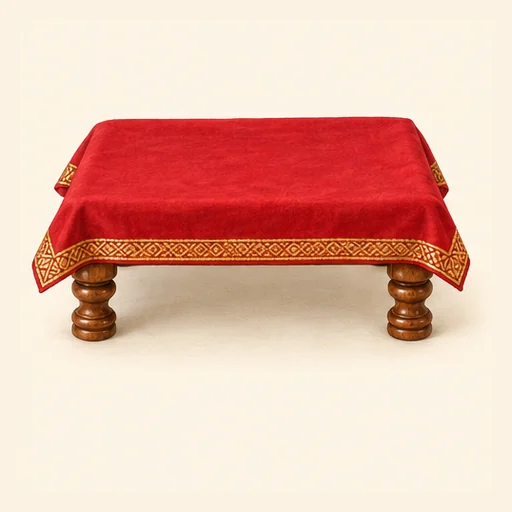 A clean low platform (chowki) with a red or yellow cloth
 An image of Satyanarayan (Vishnu), or a Shaligram if your family keeps one
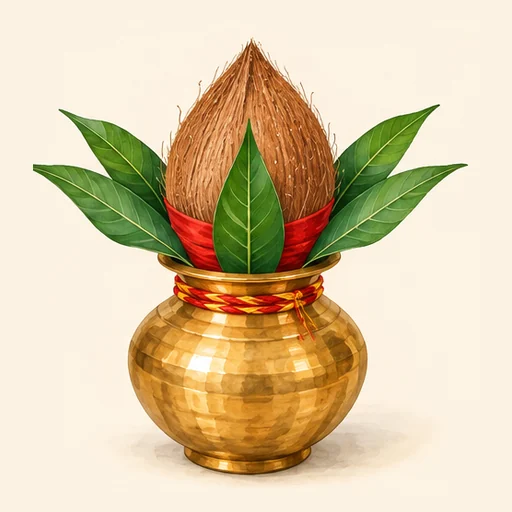 A kalash with water, mango leaves and a coconut, if your family installs one
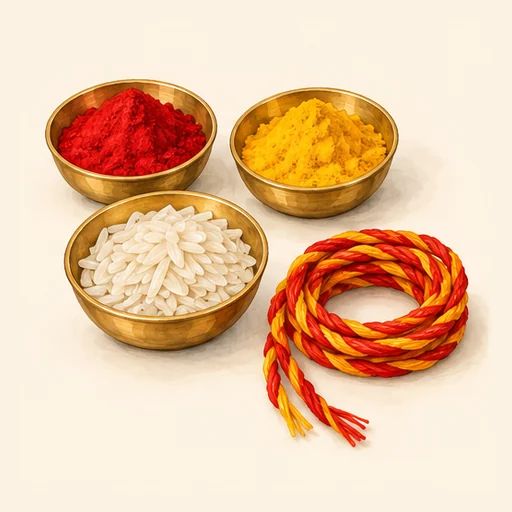 Roli, haldi, akshat and mauli; flowers and a garland
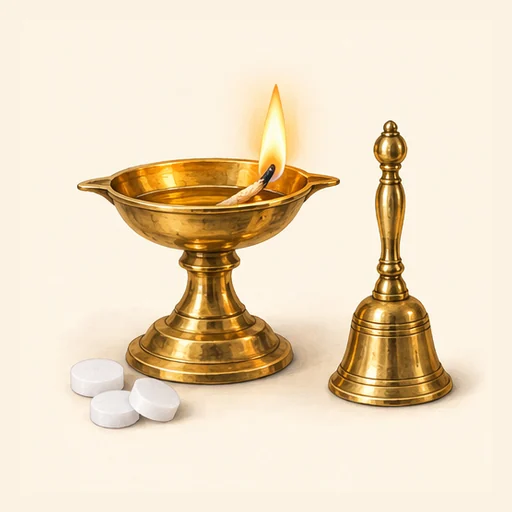 A ghee lamp, incense, camphor and a bell
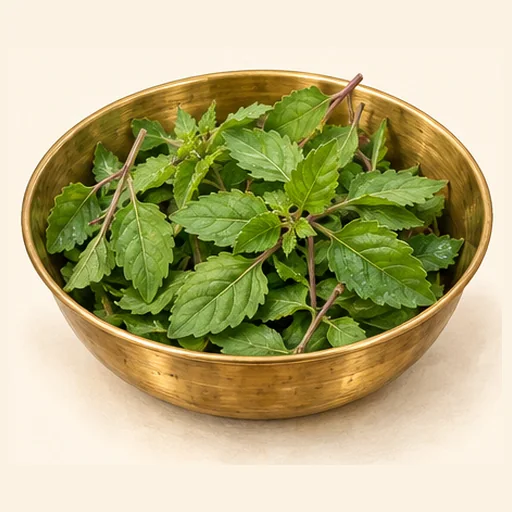 Tulsi leaves for the prasad
 Panchamrit
 Sooji sheera with banana, or panjiri, as your family makes it
 Bananas and dry fruit
Steps
- Prepare the place and the prasad. Set up the chowki with the image of Satyanarayan, the kalash if you use one, and the puja plate. Make the prasad and the panchamrit, and invite family and friends.
- Begin with Ganesha. Light the lamp, purify with water, and remember Ganesha before any puja.
- Worship Satyanarayan. Remember Vishnu with the meditation verse, then offer roli, akshat, flowers, incense and lamp. Bathe the Shaligram or offer panchamrit, as your family does.
- Hear the katha. Read or listen to the five chapters of the katha with the whole family, holding a little akshat or a flower, and offer it at the end of each chapter.
- Aarti. Sing the Satyanarayan aarti with camphor or the ghee lamp.
- Share the prasad with everyone. Give panchamrit and prasad to everyone present, and take it yourself. The katha’s lesson is never to refuse or forget the prasad.
Purification shloka (pavitrīkaraṇa)
अपवित्रः पवित्रो वा सर्वावस्थां गतोऽपि वा।
यः स्मरेत्पुण्डरीकाक्षं स बाह्याभ्यन्तरः शुचिः॥
apavitraḥ pavitro vā sarvāvasthāṃ gato'pi vā|
yaḥ smaretpuṇḍarīkākṣaṃ sa bāhyābhyantaraḥ śuciḥ||
Lamp prayer (dīpa-jyoti)
शुभं करोति कल्याणमारोग्यं धनसम्पदा।
शत्रुबुद्धिविनाशाय दीपज्योतिर्नमोऽस्तु ते॥
śubhaṃ karoti kalyāṇamārogyaṃ dhanasampadā|
śatrubuddhivināśāya dīpajyotirnamo'stu te||
Remembering Ganesha (Vakratuṇḍa)
वक्रतुण्ड महाकाय सूर्यकोटिसमप्रभ।
निर्विघ्नं कुरु मे देव सर्वकार्येषु सर्वदा॥
vakratuṇḍa mahākāya sūryakoṭisamaprabha|
nirvighnaṃ kuru me deva sarvakāryeṣu sarvadā||
ॐ श्रीगणेशाय नमः।
oṃ śrīgaṇeśāya namaḥ|
Remembering Vishnu · Śāntākāram
शान्ताकारं भुजगशयनं पद्मनाभं सुरेशं
विश्वाधारं गगनसदृशं मेघवर्णं शुभाङ्गम्।
लक्ष्मीकान्तं कमलनयनं योगिभिर्ध्यानगम्यं
वन्दे विष्णुं भवभयहरं सर्वलोकैकनाथम्॥
śāntākāraṃ bhujagaśayanaṃ padmanābhaṃ sureśaṃ
viśvādhāraṃ gaganasadṛśaṃ meghavarṇaṃ śubhāṅgam|
lakṣmīkāntaṃ kamalanayanaṃ yogibhirdhyānagamyaṃ
vande viṣṇuṃ bhavabhayaharaṃ sarvalokaikanātham||
Satyanarayan aarti · Jai Lakshmi Ramana
जय लक्ष्मी रमणा, स्वामी जय लक्ष्मी रमणा।
सत्यनारायण स्वामी, जन-पातक-हरणा॥
Jai Lakshmi ramana, swami jai Lakshmi ramana.
Satyanarayan swami, jan-patak-harana.
रत्न जड़ित सिंहासन, अद्भुत छवि राजे।
नारद करत निराजन, घंटा ध्वनि बाजे॥
Ratn jadit sinhasan, adbhut chhavi raje.
Narad karat nirajan, ghanta dhvani baje.
प्रकट भये कलि कारण, द्विज को दरस दियो।
बूढ़ो ब्राह्मण बनकर, कंचन महल कियो॥
Prakat bhaye kali karan, dvij ko daras diyo.
Budho brahman bankar, kanchan mahal kiyo.
दुर्बल भील कठारो, जिन पर कृपा करी।
चन्द्रचूड़ एक राजा, तिनकी बिपति हरी॥
Durbal bhil katharo, jin par kripa kari.
Chandrachud ek raja, tinki bipati hari.
वैश्य मनोरथ पायो, श्रद्धा तज दीन्ही।
सो फल भोग्यो प्रभुजी, फिर स्तुति कीन्ही॥
Vaishya manorath payo, shraddha taj dinhi.
So phal bhogyo prabhuji, phir stuti kinhi.
भाव भक्ति के कारण, छिन-छिन रूप धर्यो।
श्रद्धा धारण कीन्ही, तिनको काज सर्यो॥
Bhav bhakti ke karan, chhin-chhin rup dharyo.
Shraddha dharan kinhi, tinko kaj saryo.
ग्वाल-बाल संग राजा, वन में भक्ति करी।
मनवांछित फल दीन्हों, दीनदयाल हरी॥
Gval-bal sang raja, van mein bhakti kari.
Manvanchhit phal dinhon, dindayal Hari.
चढ़त प्रसाद सवायो, कदली फल मेवा।
धूप दीप तुलसी से, राजी सत्यदेवा॥
Chadhat prasad savayo, kadli phal meva.
Dhup dip tulsi se, raji Satyadeva.
श्री सत्यनारायण जी की आरती, जो कोई नर गावे।
तन-मन-सुख-सम्पत्ति, मनवांछित फल पावे॥
Shri Satyanarayan ji ki aarti, jo koi nar gave.
Tan-man-sukh-sampatti, manvanchhit phal pave.
KathaVidhi · Meanings are in the online companion. · CC BY-SA 4.0